
The year 2026 marks a critical turning point for commercial energy management in Saudi Arabia. As the Kingdom enters the final four-year stretch toward its ambitious Vision 2030 sustainability benchmarks, commercial enterprises face an unprecedented convergence of strict regulatory updates, rising utility costs, and the mass deployment of state-backed smart grid technologies.
For local organizations, mastering commercial energy management in Saudi Arabia during this pivotal year is no longer just about environmental compliance; it is the single most effective strategy to safeguard long-term corporate profitability and reduce overhead costs.
The Evolution of Commercial Energy Management in Saudi Arabia
The transition of commercial energy management across Saudi Arabia represents a structural shift from heavily subsidized, unmonitored baseline power usage to a strictly regulated ecosystem. Historically, low electricity tariffs offered commercial real estate operators minimal financial incentive to curb consumption or modernise mechanical infrastructure. However, the formal introduction of the Saudi Green Initiative and updated structural targets within Vision 2030 permanently disrupted this framework. Today, macroeconomic energy trends Saudi Arabia are dictated by the aggressive phase-out of utility subsidies and the introduction of strict compliance mandates by the Saudi Energy Efficiency Center (SEEC). These regulatory pressures, coupled with a national push toward carbon neutrality, have transformed efficiency from an isolated operational goal into a core boardroom metric.

Trend #1: Real-Time Energy Monitoring Becomes the New Standard
Deploying comprehensive energy monitoring systems Saudi Arabia has shifted from a reactive monthly auditing practice to a real-time operational necessity. Commercial facilities relied entirely on traditional utility invoices to review power costs. This backward-looking approach made it nearly impossible to trace sudden power surges, phase imbalances, or operational inefficiencies before the billing cycle concluded.
Today, real-time monitoring solves this blind spot by providing continuous visibility into exact electrical loads via localized IoT sensors and current transformers (CTs), as this data allows property managers to track metrics like the localized energy cost per specific product or area, so commercial entities can easily spot idle-running machinery, identify immediate operational waste, and dynamically adjust power usage to avoid expensive peak-tariff penalties.
Trend #2: Smart Metering Adoption Continues to Accelerate
When integrated with advanced facility networks, smart metering Saudi Arabia allows operations teams to track real-time grid metrics, respond to dynamic peak-load pricing, and balance phase distributions across complex facilities.
This structural visibility acts as a smart building solution in KSA that allows businesses to seamlessly align their day-to-day operations with the Kingdom's modernizing power grid, moderating the risk of brownouts and ensuring optimal power quality.
Trend #3: The Rise of Smart Energy Buildings in KSA
Smart energy buildings KSA integrate advanced automation, interconnected hardware, and software platforms to continuously optimize environmental conditions while keeping carbon footprints and operational expenditures at an absolute minimum.
Green buildings Riyadh can automatically reduce climate control in empty zones and lower lighting based on natural daylight levels. Additionally, they rely on an interconnected framework where HVAC, lighting, and asset health systems communicate via centralized digital networks.
The importance of this optimization is validated by the IEA in their report “The Future of Electricity in the Middle East and North Africa”, which notes that because average temperatures in the region are rising at twice the global rate, commercial space cooling alone now accounts for nearly half of total peak electricity demand.
Trend #4: ESG and Sustainability Reporting Are Becoming Business Priorities
Driven by the Saudi Green Initiative and the Saudi Exchange’s (Tadawul) formalized ESG disclosure guidelines, businesses must now provide verifiable, data-backed reports on their carbon footprints and resource consumption. This structural shift has elevated the demand for comprehensive ESG energy solutions that convert abstract sustainability goals into measurable corporate metrics.
Implementing specialized ESG energy solutions for commercial buildings allows Saudi commercial entities to seamlessly bridge the gap between compliance mandates and daily operations, and confidently satisfy local regulatory bodies, mitigate climate risk, and maintain a distinct competitive advantage when attracting global investment partners.
Trend #5: Green Building Initiatives Gain Momentum
Due to strict mandates from municipal authorities and the introduction of localized sustainability codes, commercial developers are universally embracing sustainable building solutions, as this movement ensures that new developments and existing property retrofits prioritize material lifecycle longevity, circular resource efficiency, and minimal long-term impact on the surrounding environment.
According to data compiled by the International Energy Agency (IEA) Policy Database, Saudi Arabia has aggressively scaled the legislative enforcement of mandatory codes, such as the Saudi Green Building Code.
By embedding holistic building energy management strategies directly into the structural architecture, commercial operators can significantly lower their baseline utility demands, satisfy stringent regulatory criteria, and earn prestigious international green certifications like LEED and local certifications like Mostadam.
Trend #6: AI-Powered Energy Analytics Is Transforming Decision-Making
The integration of artificial intelligence into commercial operations is completely revolutionizing how modern enterprises identify and eliminate resource waste through the following:
Continuous Data Analytics:
Advanced platforms like IOTech Energy ingest real-time data streams to automatically uncover hidden waste and accurately forecast future load demands.
Predictive Asset Maintenance:
Cognitive engines track slight equipment anomalies to trigger preventative alerts before costly breakdown events occur.
Idle Waste Eradication:
Automated analytics instantly catch machinery running unnecessarily during off-peak hours to aggressively lower utility bills.
Data-Driven Capital Savings:
Eliminating manual guesswork protects expensive equipment lifespans and simplifies complex corporate financial planning.
Trend #7: Multi-Site Energy Management Is Becoming More Strategic
Checking power bills for just one building is no longer enough to save a company money. Today, property managers who look after many different buildings at the same time, known as portfolio directors, are changing how they handle energy efficiency in Saudi Arabia. Instead of fixing one building at a time, they are connecting all their properties to a single system, and we at IoTech Energy can help you with multi-site commercial energy management.
By installing Eniscope EMS, IoTech connects every property to a single, central dashboard to fight rising energy costs across your entire business, so business leaders can easily see which properties are wasting power and which ones are saving it.
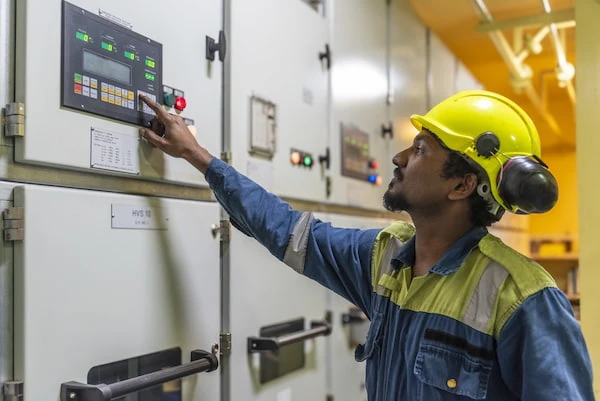
How Saudi Businesses Can Prepare for the Future of Energy Management
At IoTech Energy, we help forward-thinking enterprises in preparing for the future of energy management in Saudi Arabia, as demonstrated by the following:
Transitioning to Granular Monitoring:
When NovaWaters Factory in Riyadh needed to tackle industrial-scale waste, we provided and installed advanced monitoring tailored for their application.
By enabling them to analyze power consumption on a second-to-daily basis, track real-time power factors, and calculate the exact electricity cost per bottle, we gave them the actionable insights to establish a green roadmap with a rapid 1.8-year payback.
Eliminating Multi-Site Energy Waste:
When Kudu Restaurants faced an estimated 20% baseline energy inefficiency across its chain, they partnered with us to reverse the trend.
Today, more than 30 Kudu restaurants run on active IoTech Energy solutions, capturing a 15% annual energy reduction; slashing 53,571 kWh per store with a proven 1.6-year payback period.
Isolating Unit-Level Operational Costs:
We shift your focus from macro-facility metrics to micro-level cost tracking. By utilizing our specialized wireless IoT hardware and software, we calculate precise operational data to convert abstract efficiency targets into measurable financial returns.
Deploying Predictive Infrastructure Upgrades:
We help your team use real-time insights to optimize load distribution and asset health before issues arise, as our specialized smart automation networks automatically flag your idle-running machinery, maintain machine lifespans, and systematically lower your corporate carbon emissions.
Why Choose IoTech Energy for Commercial Energy Management
Choosing IoTech Energy means partnering with a specialized technology integrator that transforms raw utility data into direct corporate profitability across Saudi Arabia:
Energy Monitoring & Optimization:
IoTech provides real-time tracking, analytics, and automation to uncover hidden waste and directly cut your facility costs.
Intelligent Technology Stack:
We power your commercial operations through smart, scalable systems like the Eniscope platform and specialized Air suite tools.
Advanced Low-Current Infrastructure:
Our team handles advanced networking and IT infrastructure setups to guarantee secure, highly reliable building operations.
National & ESG Sustainability Goals:
Every custom data-driven solution is engineered to reduce carbon footprints and seamlessly align with Saudi Vision 2030 objectives.
Conclusion
Automated, data-driven utility infrastructure across Saudi Arabia is now a live reality. Future-proofing your facility requires a shift toward real-time, asset-level visibility and automated control. By embedding intelligent IoT networks, your business can permanently eliminate resource waste and insulate itself from volatile tariff spikes.
Ready to maximize your annual energy savings? Visit our website today to explore our specialized sectors, cutting-edge technologies, and tailored enterprise solutions. Don’t forget to contact us directly to schedule your custom operational assessment.
FAQs
What is commercial energy management?
Commercial energy management involves tracking, controlling, and optimizing power usage across facilities like offices and retail centers. By deploying advanced digital systems by IoTech Energy, you can convert raw utility data into real-time operational insights to eliminate resource waste.
Why is commercial energy management important in Saudi Arabia?
Commercial energy management is vital in Saudi Arabia due to rising tariffs and strict SEEC mandates under Vision 2030. IoTech Energy helps enterprises navigate this shift, transforming regulatory compliance into measurable overhead cost reductions.
What are smart energy buildings?
Smart energy buildings use interconnected IoT sensors, automation hardware, and software networks to optimize efficiency. These intelligent systems automatically adjust high-load HVAC and lighting, consuming power only when and where it is strictly required.
How do ESG requirements impact energy management strategies?
ESG requirements force companies to replace manual estimations with precise, audit-ready carbon disclosures. IoTech Energy satisfies these mandates by providing automated tracking software that monitors greenhouse gas emissions and unit-level energy costs to support net-zero corporate journeys.

