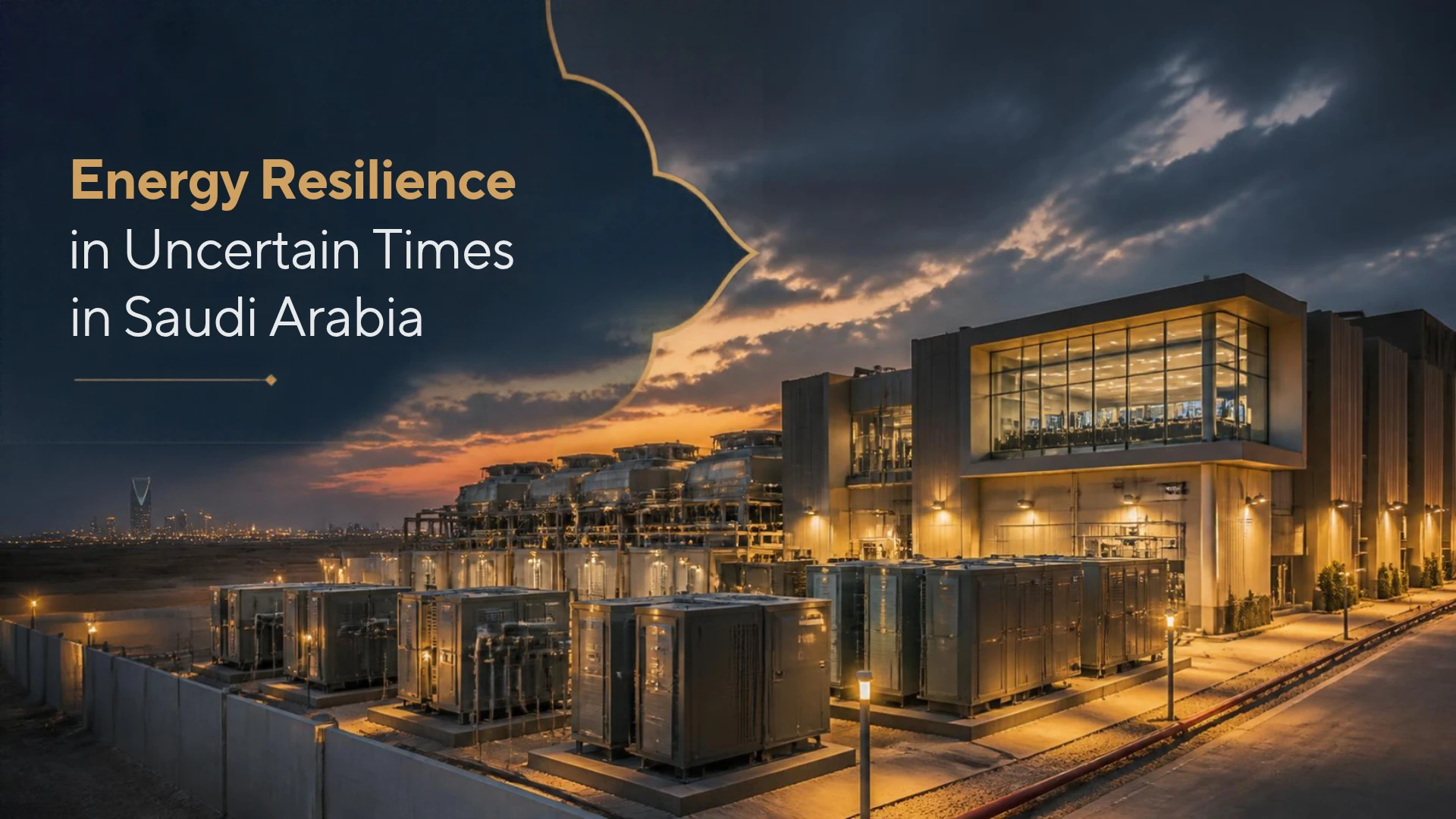
This week, Riyadh became the centre of the global energy conversation. The 25th WPC Energy Congress opened on 12 October at the Riyadh Front Exhibition and Conference Center, the first time the Congress has ever been held in Saudi Arabia, with around 25,000 delegates, more than 100 ministers and roughly 500 CEOs expected over five days. The theme was "Pathways to an Energy Future for All."
What we heard in the opening session
Two ideas stayed with us. The first came from the Saudi Energy Minister, who described resilience as more than surviving a shock. In his framing, it also means repairing quickly, restoring operations and continuing to serve customers. He pointed to the things built over many years, such as storage, backup routes and local capability, that make that possible.
The second came from the President of WPC Energy, who argued that the world has to stop treating security, affordability and sustainability as a trade-off, and that a fourth priority, economic development, belongs in the same conversation. Demand keeps growing, he said, and no single source can carry it alone.
Those are big, national-scale ideas. But read them again with a building in mind, a hotel, a factory, a chain of restaurants, and they sound surprisingly familiar. Resilience is built before the difficult day. It depends on knowing what you have. And it works best when you are not relying on a single thing.
Three conversations we keep having
The scenes below are composites of conversations we have with clients and prospects. Names, places and details are changed, but the situations are real ones we see again and again.
The hotel engineer who reads the news before the meter. He gets to the property at six, checks the headlines, and then checks the electricity numbers, because he knows that whatever happens in the wider world will eventually show up in the budget he has to defend. His problem is that he only finds out what the building used a month later, when the bill arrives. By then it is history. What he wants is the story while it is still happening: which floors, which plant, which hours.
The plant manager who cannot afford a surprise. His production line does not forgive unplanned stops. When a chiller starts drawing more than it should, or a motor starts to struggle, he would rather know on Tuesday than discover it on Friday night. For him, resilience is not a strategy document. It is an alert on his phone that arrives early enough to act on, and a record of what normal looks like so he can see when something is not.
The owner with six branches and one spreadsheet. She started with one shop and now has six, and every month she compares bills that arrive on different days and mean different things. She has a feeling that one branch is quietly costing her more than the others, but she cannot prove it. When the market feels uncertain, her first instinct is to look for savings, and her first problem is that she does not know where to look.
None of these people is asking for a complexity. They are asking for something much simpler: to see their own energy clearly, so that when the world gets noisy they still have one thing they understand.
Resilience starts with visibility
At the scale of a country, resilience is pipelines, storage and trained people. At the scale of a building, it starts with data. You cannot protect what you cannot see, and you cannot cut what you have not measured. That is the whole idea behind energy monitoring: put meters and sensors where the energy is used, bring the readings into one place, and let the building tell you what it is doing.
Once that picture exists, a handful of very practical things become possible:
You know your baseline. A building has a rhythm, and once you can see it you can spot the nights and weekends when it is using more than it should. Many sites find that the first and cheapest saving is simply switching off what nobody is using. Our guide to what energy management costs and what it returns walks through how to think about that return honestly.
You catch problems early. Unusual consumption is often the first sign that equipment is failing. Tying monitoring to maintenance means fixing things on your schedule, not the equipment's. We wrote about that in preventive maintenance for commercial buildings.
You can compare across sites. If you run more than one location, putting them side by side is where hidden waste usually shows up. See multi-site energy management in Saudi Arabia for how that works in practice.
You can plan, not just react. When you know where the energy goes, deciding what to do first stops being guesswork. An energy audit gives you the starting list, and monitoring tells you whether the changes worked.
The quiet link to the national picture
There is one more connection worth saying out loud. Saudi Arabia is investing heavily in efficiency as part of its long-term energy plans, and every building that uses less for the same comfort and output helps the whole system. Efficiency is the one source of energy that no one has to import, ship or store. It is also the one that building owners control directly.
That is a modest thing to say in a week of ministers and CEOs. But we think it is true: national resilience is made of a great many individual decisions, and some of the most useful ones are made by a facility manager looking at a screen at six in the morning.
Where to start this month
You do not need a large programme to begin. Pick your most important site, or your most expensive one. Find out what it uses overnight. Identify the three biggest loads. Decide who gets the alert when something looks wrong. If you would like help with any of those steps, our team will walk through it with you, and you can see how our energy monitoring solutions work, or get in touch to talk through your own building.
Uncertain times will come and go. A building that understands its own energy is better prepared for all of them.
Frequently Asked Questions
What is the WPC Energy Congress? The WPC Energy Congress is a global gathering of energy ministers, company leaders, technical experts and policymakers, organised by WPC Energy. The 25th Congress is being held in Riyadh from 11 to 15 October 2026 under the theme "Pathways to an Energy Future for All," and it is the first time the event has been hosted in Saudi Arabia.
What does energy resilience mean for a commercial building? It means being able to keep operating, control costs and recover quickly when conditions change. In practice, it starts with knowing how much energy each part of the building uses, getting early warning when something drifts from normal, and having a clear plan for what matters most.
How does energy monitoring help in uncertain times? Monitoring replaces monthly bill surprises with live visibility. You can see consumption by site, area or equipment, catch faults earlier, and act on the largest savings first. That gives facility managers something concrete to control when external conditions are not in their hands.
Where should a business in Saudi Arabia start? Begin with one site. Measure its consumption, find its overnight and weekend baseline, and identify the biggest loads. From there, an energy audit and a monitoring system give you a prioritised list of actions and a way to confirm that they worked.
Does IOTech Energy work with businesses of any size? Yes. We work with single sites and multi-site operators across sectors such as hospitality, food and beverage, retail, manufacturing and education. If you are unsure whether monitoring makes sense for your building, contact our team and we will help you assess it.
