
As Saudi Arabia accelerates toward its Vision 2030 sustainability goals, rapid urbanization and extreme desert climates are making traditional infrastructure unsustainable.
By integrating advanced IoT + Energy Management solutions, these modern structures transform real-time data into automated efficiency to combat intense cooling demands.
What Is IoT?
The Internet of Things (IoT) is a cohesive network of physical objects embedded with sensors, software, and advanced technologies. These interconnected components seamlessly collect, transmit, and exchange data over the internet without requiring human intervention.
What Are Smart Buildings?
Smart buildings are physical structures that use connected sensors, IoT devices, and AI to automate and integrate technologies to monitor and optimize core operations, including heating, ventilation, lighting, and security systems.
The Connection Between IoT and Energy Management
Integrating IoT with energy management systems for smart buildings turns raw data into actionable insights. Smart buildings IoT networks collect detailed, real-time data from facility assets to support smarter operations.
By 2040, over 1 billion households and 11 billion smart devices could help create interconnected electricity systems, enabling homes to adjust when and how much power they use from the grid. (The IEA, Digitalisation set to transform global energy system).
How IoT Technologies Power Smart Buildings
Understanding how IoT improves smart building performance comes down to how the following layers interact:
Smart Sensors:
Hardware units that track ambient temperature, relative humidity, light levels, and occupancy variables to optimize room conditions automatically.
Connected Devices:
Smart meters and intelligent controllers linked across an integrated building-wide digital network to keep physical hardware communicative.
Real-Time Data Collection:
Continuous streams of telemetry measuring active load distribution every single second to catch instantaneous power spikes.
Cloud-Based Monitoring Platforms:
Central software hubs where asset data is aggregated, analyzed, and managed remotely from any location.
Read more: Energy Management System in Saudi Arabia: Complete 2026 Guide.
How Energy Management Systems Improve Building Performance
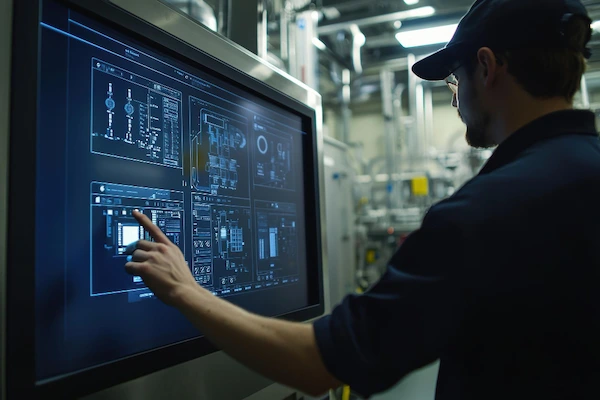
Buildings account for about 30% of global energy demand. Since 2019, they have driven around 20% of demand growth, with residential buildings using 70% of building energy and commercial/public buildings the remaining 30% (The IEA, Energy Efficiency 2025, Buildings). A centralized framework turns unmetered resource use into structured, predictable operational data through several key functions:
Energy Monitoring:
Continuous, second-by-second tracking of power loads across sites, circuits, and specific machinery to give managers total transparency.
Consumption Analytics:
Software tools that isolate operational anomalies, calculate costs, and identify hidden areas of energy waste instantly.
Automated Controls:
Smart cloud platforms that turn off idle machinery and regulate high-energy assets without needing manual human intervention.
Utility Optimization:
Targeted strategies designed to eliminate demand spikes, correct power factors, and reduce baseline utility rates significantly.
Key Ways IoT and Energy Management Work Together
When hardware connectivity and energy analytics operate together, they create an automated environment that drives long-term efficiency through the following:
Real-Time Energy Visibility:
Immediate, clear insights into consumption profiles across all regional facility networks to allow fast managerial decisions.
Automated Energy Control:
Instant, automated rule-sets that modify equipment operation based on live building performance and environmental shifts.
Predictive Maintenance:
Early warning alerts that catch mechanical issues and operational irregularities before assets fail completely.
Occupancy-Based Optimization:
Dynamic adjustments to lighting and climate systems based on whether a room is occupied or empty.
Asset Performance Monitoring:
Deep analytical tracking to confirm every piece of machinery runs within its optimal manufacturer parameters.
Read more: Top 7 Benefits of Energy Monitoring Solutions for Commercial Buildings in Saudi Arabia.
Smart HVAC Monitoring: Why is it One of the Biggest Opportunities for Savings
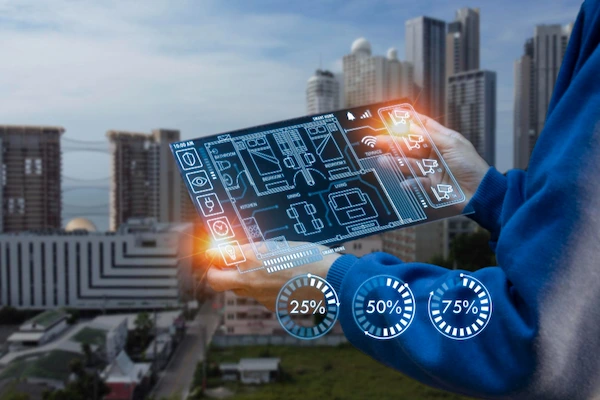
Climate control systems represent the most intensive source of power consumption for commercial properties operating in arid climates. The IEA states in its report “The Future of Electricity in the Middle East and North Africa” that the MENA region is warming at more than twice the global average, with summer temperatures often exceeding 40°C. As a result, cooling now accounts for a quarter of annual electricity use and nearly half of peak demand.
In Saudi buildings, where HVAC systems operate intensively to maintain indoor comfort during extreme summer temperatures, specialized smart HVAC monitoring allows businesses to closely analyze real-time performance, catch compressor inefficiencies early, and prevent unnecessary cooling in empty zones.
Top Benefits of Combining IoT and Energy Management in Smart Buildings in Saudi Arabia
Unifying smart networks with targeted conservation frameworks delivers significant operational, financial, and environmental advantages, as follows:
Drastic Cost Reductions:
Lowering peak demand charges and cutting overall utility consumption across portfolios. For instance, Kudu successfully utilized IoTech Energy solutions across 30+ active locations to achieve a 15% annual savings and an annual reduction of 53,571 kWh per store, earning a fast 1.6-year payback.
Extended Asset Lifespans:
Lowering mechanical wear and tear through automated scheduling and proactive maintenance, keeping machinery healthier for longer.
Minimized Carbon Footprints:
Directly lowering greenhouse gas emissions to actively support corporate sustainability metrics and national environmental frameworks.
Streamlined Facility Management:
Reducing manual equipment checks by shifting to centralized, cloud-based oversight that alerts teams automatically.
Enhanced Occupant Comfort:
Maintaining ideal lighting, air quality, and climate through responsive automation that adapts to outdoor weather.
According to the IEA’s report “Digitalisation set to transform global energy system”, demand-side responses – in building, industry and transport – could provide 185 GW of flexibility, and avoid USD 270 billion of investment in new electricity infrastructure.
Real-World Applications in Commercial Buildings
Implementing IoT and energy management for commercial buildings with IoTech Energy allows corporate leaders to see exactly where money is being wasted across multiple commercial sectors:
Offices:
Centralized IoT systems consolidate real-time data across hundreds of locations, allowing enterprises to deploy automated efficiency strategies and track carbon reduction, which is perfect for multi-site commercial.
Hotels:
Hotels waste about 29% of the energy they purchase. Smart facility systems cut this waste through real-time monitoring of energy use, temperature, humidity, and occupancy, reducing costs while maintaining guest comfort.
Retail Facilities:
High energy strains from constant commercial refrigeration, HVAC, and cooking equipment make food retail ideal for IoT and Energy Management, as asset-level monitoring pinpoints hidden leaks and ensures equipment efficiency across multi-site chains without compromising food safety.
Educational Campuses:
In education, campuses contain diverse facilities with varying schedules. An intelligent EMS reduces waste during weekends, holidays, and off-peak periods by aligning energy use with actual occupancy.
Industrial Facilities:
Tracking machinery, improving power factors, and monitoring energy-intensive manufacturing processes. For example, NovaWaters in Riyadh used our cloud dashboards for real-time power visibility, tracked electricity costs per bottle, corrected its power factor, and achieved a 1.8-year payback on its net-zero transition.
Why Businesses Choose IoTech Energy for Smart Building Solutions
When searching for premier Smart Building Solutions Riyadh, IoTech Energy delivers world-class, scalable energy management systems that transform facility operations across Saudi Arabia. Our expertise speaks for itself through the following core operational strengths
Massive Scale & Proven Implementation Track Record:
Operating across a 70+ country channel network with over 260,000 active Energy & IoT hubs worldwide. Powering more than 10,500 implemented projects and collecting over 2.7 billion daily data points globally.
Advanced Eniscope EMS and Eniscope Air Technologies:
Utilizing the cutting-edge Eniscope EMS tool to make power consumption completely visible across multiple facilities, alongside the Eniscope Air suite, which functions as a light, agile Building Management System (BMS) at a fraction of the standard cost.
Granular Circuit-Level Monitoring & Intelligent Waste Detection:
Tracking energy usage at the precise site, circuit, and asset level with dashboard reporting for finance and operations. Also, we send automated predictive alerts to catch idle running machines, protect asset lifespan, and flag abnormal consumption early.
Advanced Financial Tracking:
Calculating the exact energy cost per product while monitoring load distributions and updated load schedules.
The Future of Smart Buildings in Saudi Arabia
The future of commercial property in Saudi Arabia lies in digital automation and data-driven sustainability. Aligned with Vision 2030, Saudi Arabia is replacing legacy infrastructure with adaptive, low-carbon facilities. This transformation is reflected in Saudi mega-projects such as NEOM, which includes The Line; a planned 170-kilometer linear city designed around connected infrastructure, intelligent energy management, and data-driven urban services
According to the IEA’s “More efficient and flexible buildings are key to clean energy transitions”, the number of smart meters and connected building devices with automated controls is expected to nearly double by 2030.
In Conclusion
Adopting integrated automation helps enterprises reduce utility costs, protect critical equipment, and meet sustainability goals. Partnering with an intelligent building technologies provider in Saudi Arabia enables businesses to uncover efficiencies across their entire property portfolio. We invite you to visit our website, explore our advanced internet-connected technologies, review our customized resource solutions, and discover how we optimize energy footprints across various sectors.
Don’t forget to contact us and book a consultation to launch your smart energy strategy with the best IoT company in Saudi Arabia!
FAQs
What is the role of IoT in smart buildings?
Building automation IoT networks use sensors and smart meters to collect real-time data from critical assets, enabling automated systems to optimize energy consumption instantly.
What are the benefits of smart HVAC monitoring?
The key benefits of smart buildings in Saudi Arabia include real-time climate control monitoring, waste reduction, and early fault detection. With IoTech’s tailored smart facility management solutions, businesses can lower energy consumption while maintaining occupant comfort.
How do smart buildings support sustainability goals?
Deploying smart buildings across Saudi Arabia accelerates corporate sustainability by using real-time data to eliminate electricity waste, lower overall carbon emissions, and optimize resource use. This structured approach to smart facility management in Saudi Arabia directly supports the Kingdom's Vision 2030 sustainability objectives.
Can IoT reduce energy costs in commercial buildings?
Yes. It lowers energy costs by identifying waste, monitoring circuit-level consumption, and automating equipment schedules. Businesses pursuing intelligent buildings KSA upgrades can deploy tailored IoT solutions in Saudi Arabia to achieve average energy savings of 15% with fast payback periods.
The same sensor platform extends beyond electricity to CO2, occupancy and indoor air quality monitoring, giving a fuller picture of how a smart building is actually performing.

